

Primary 3 marks a significant transition — your child will encounter formal assessments for the first time, and Science becomes a new subject. For Primary 4, the focus shifts to strengthening foundations that will carry through to PSLE.
We’ve been conducting subject-specific parent briefings throughout January to help you understand what matters most at this stage. Here are key pointers we’re covering in our P3 & P4 briefings:
English: Building vocabulary, grammar foundations, and good reading habits
Maths: Mastering model method and structured problem-solving frameworks
Science: Understanding concepts deeply and learning correct scientific terminology
Chinese: Systematic strategies for reading comprehension, composition, and home practice
Our bundle discount (up to 20% off) ends on 31 January — register now to secure the best savings, or chat with us on WhatsApp if you have questions.
English: Strong Foundations Start with Reading and Vocabulary
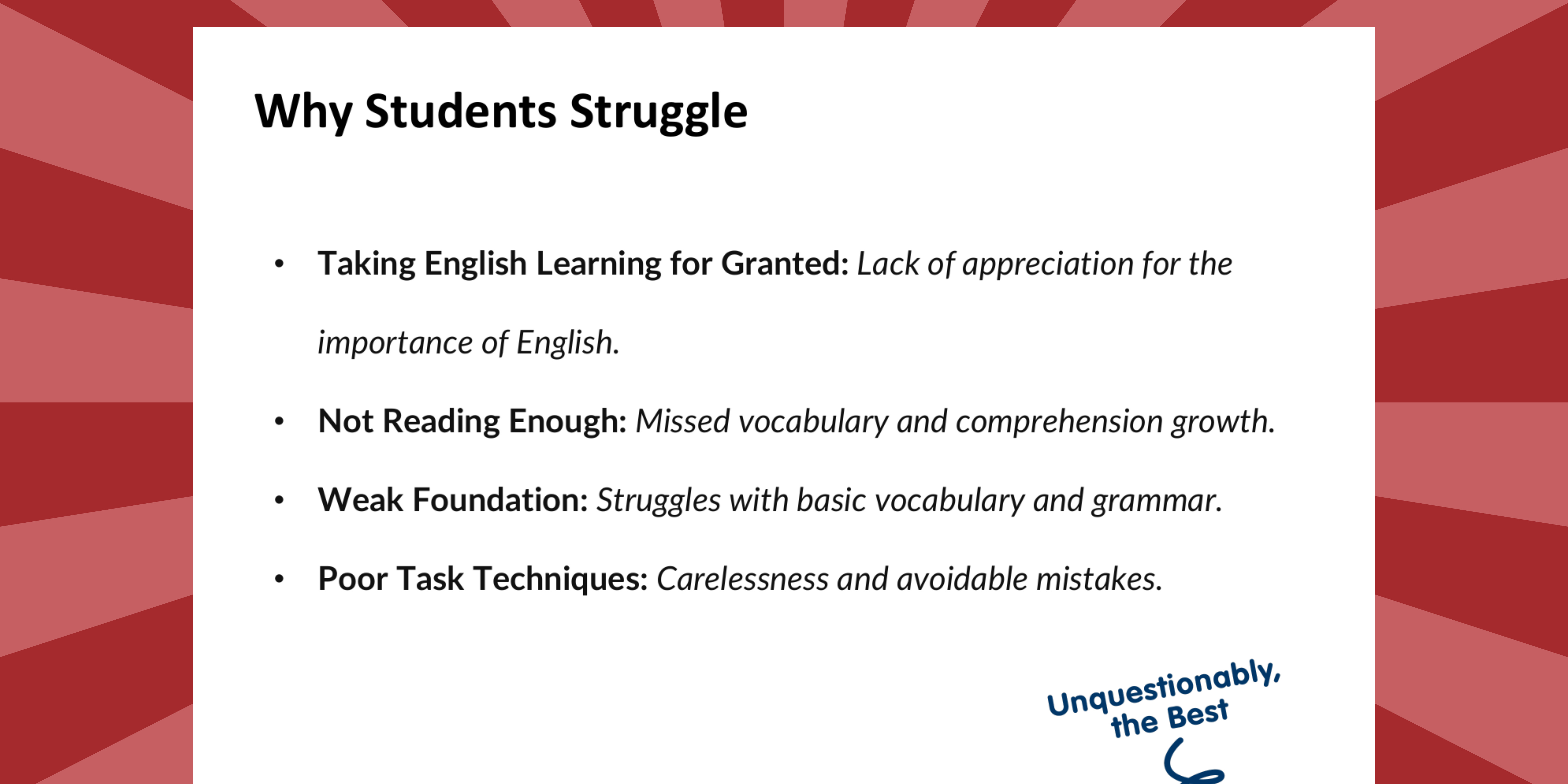
Many students struggle with English because they haven’t built a strong enough foundation in vocabulary and grammar.
Reading regularly matters. Students who read widely develop better vocabulary, comprehension skills, and an intuitive sense of grammar. Encourage your child to read age-appropriate books and magazines — and make it a daily habit, not just before exams.
Vocabulary needs active practice. It’s not enough to encounter new words — students need to learn to spell them and use them correctly. Learning a few new words each day, with their meanings and usage, builds a strong foundation over time.
Grammar is the backbone of good writing. At the P3 and P4 level, students are still reinforcing essential grammar rules. Regular practice with corrections helps reinforce these skills.
Upcoming briefing: P3 & P4 English & A* Writing Lab Parent Briefing — Tue, 20 Jan, 7:30 PM
Maths: Master the Model Method Early
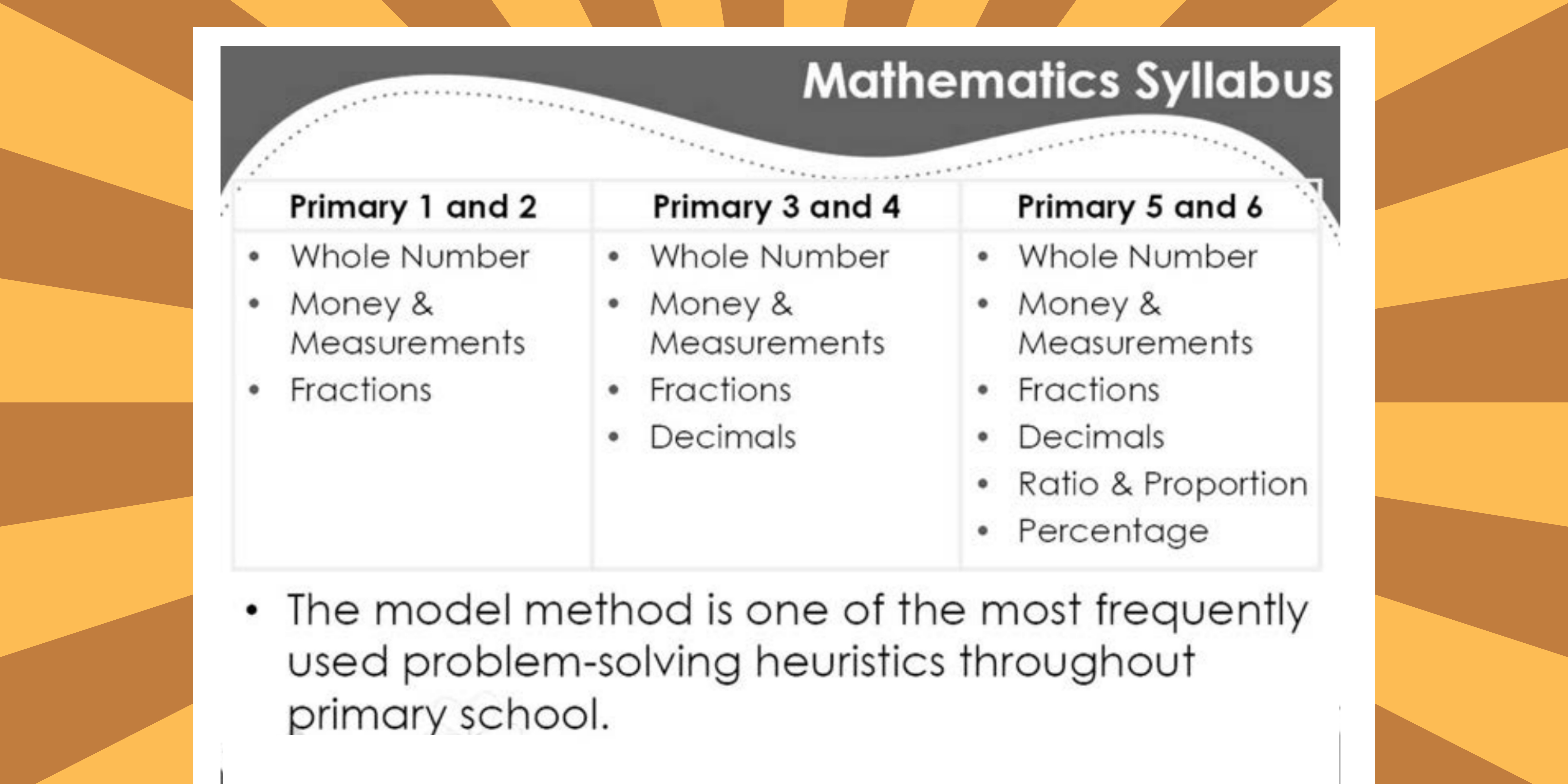
At the P3 and P4 level, students tackle more complex concepts and challenging problem sums that require structured problem-solving approaches.
Certain P3-P4 topics won’t be revisited later. Topics like length and mass, factors and multiples, nets, bar graphs, and long division are taught at this level and assumed mastered by P5. Building strong foundations now prevents gaps later.
Master the model method early. The model method is one of the most frequently used problem-solving heuristics throughout primary school. Students who understand the concept of “1 unit” and how to use before-after models will find it easier to tackle more complex problems later.
Use structured frameworks for word problems. Step-by-step approaches (Power Codes) — such as the “Before-Change-After” method for problems involving transfers between people — help students identify question types and solve them systematically, rather than relying on trial and error.
Watch the P3 & P4 Maths Briefing
Science: Understanding Beats Memorisation
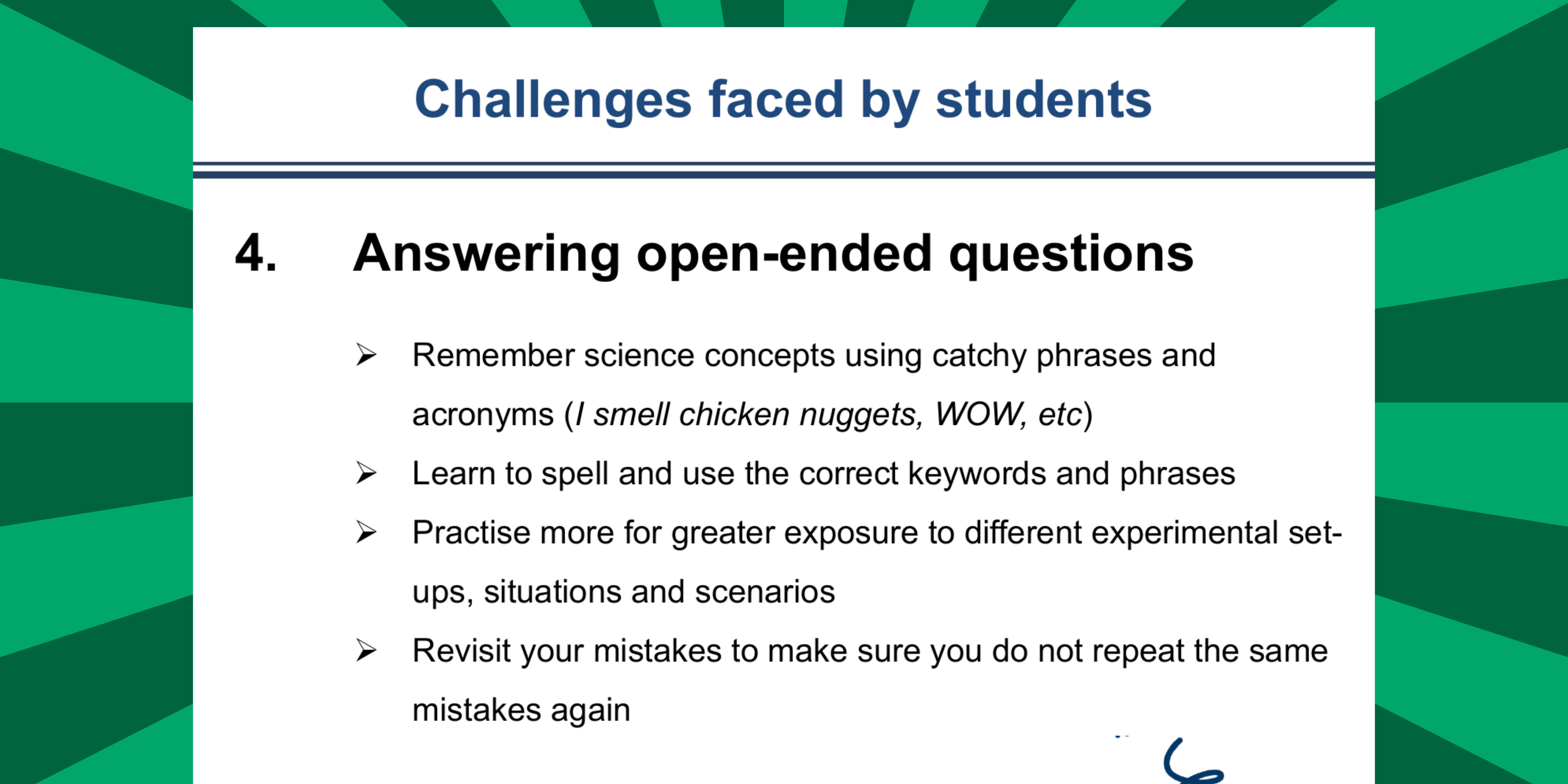
P3-P4 Science forms the foundation for PSLE. About 30% of PSLE Science questions draw from P3 and P4 topics. Building strong understanding now makes Upper Primary Science much more manageable.
Understanding beats memorisation. Encourage your child to ask “why” and “how” — not just “what”. When learning about magnets, for example, explore why magnets attract certain metals but not others. When studying life cycles, observe real plants or insects together.
Learn to analyse questions carefully. Many students lose marks because they don’t identify what the question is really asking. Teach your child to look for command words (state, describe, explain, suggest) — each requires a different type of answer. For open-ended questions, structuring responses with a clear Answer, supporting Information, and logical Reasoning (AIR) helps students score full marks.
Use correct scientific terminology. Using precise keywords like “photosynthesis” instead of “the plant makes food” helps students communicate clearly and score marks for open-ended questions.
Upcoming briefing: P3 & P4 Science Parent Briefing — Thu, 22 Jan, 7:30 PM
Chinese: Systematic Approaches to Reading and Writing
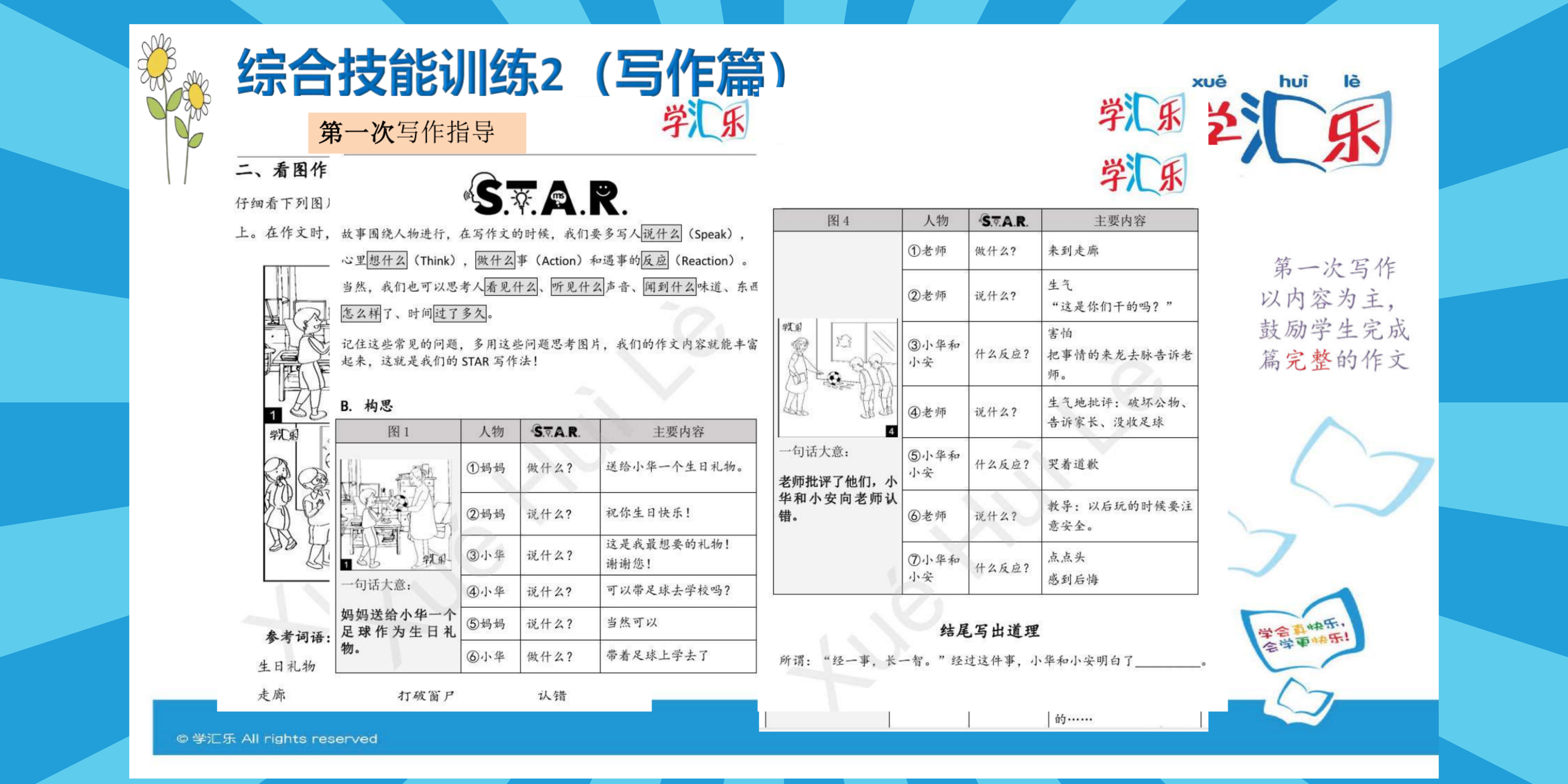
Chinese at the P3 and P4 level focuses on developing comprehensive language skills — reading comprehension, picture composition, listening, speaking, and vocabulary building.
Use the structured 3-step approach for comprehension — find keywords, locate relevant sentences, then modify text into answers — helps students answer open-ended questions accurately.
Use the STAR method for picture composition. Encourage your child to think about what characters Say, Think, do (Action), and their Reaction — this creates more engaging compositions that score well.
Supervise weekly spelling and reading aloud. These fundamentals need consistent practice at home. Use the spelling revision sheets (听写复习单) and reading aloud sheets (朗读单) we provide regularly.
Watch the P3 & P4 Chinese Briefing
2026 Registration: Bundle Promotion Ends 31 January
Our bundle discount (up to 20% off) runs till 31 January. Register for multiple subjects now to enjoy the best savings for AY 2026.
Register for AY 2026 → | Chat with Us →
If you’d like to experience classes first, make use of our 1-week unlimited trial classes to try all subjects across all centres before committing.
Upcoming: HAG Journey & Parent Briefings
Unlocking Potential: The High-Ability Growth (HAG) Journey
Discover how to nurture your child’s potential with practical strategies for critical thinking and deeper learning.
Register for HAG Journey → — Wed, 28 Jan, 7:30 PM
January Briefings for Other Levels
Have children at other levels? View our subject briefing summaries: